Machine Learning / Data Science Research
•Nov 2024 - Dec 2024
Wildfire Size Prediction
 Source Code
  Live Demo
 Cleaned and prepared 38,750 wildfire records after dataset filtering
Performed exploratory analysis on wildfire causes, climate trends, vegetation impact, and spatial distribution
Applied feature engineering on weather, time, geographical, and fire characteristics
Implemented classification models including MLP, DNN, and GCN-LSTM
Implemented regression models including CNN-LSTM, GP-LSTM, and GMM-stacking
Optimized models using Optuna, Bayesian Optimization, Random Search, and Hyperband
Deployed prediction interface using Streamlit

The problem
Wildfire prediction remains challenging because wildfire behaviour depends on complex interactions between climate conditions, vegetation, location, and human activities. Existing AI models also face limitations in explainability, data availability, and integration of diverse environmental factors (Taylor et al., 2013; Bugallo et al., 2022).
The solution
Processed a wildfire dataset containing 55,367 records and 43 attributes by filtering data from 2000–2015, handling missing values, engineering temporal and environmental features, and preserving meaningful extreme wildfire events. Multiple classification and regression models were developed and compared, including MLP, DNN, GCN-LSTM, CNN-LSTM, GP-LSTM, and GMM-stacking models.
System flow
How it works
Tech stack
Research References
What influenced this project
Explainable Global Wildfire Prediction Models using Graph Neural Networks
Chen et al., 2024
FusionFireNet: A Hybrid CNN-LSTM Approach for Wildfire Prediction
Alizadeh et al., 2024
A Hybrid LSTM-Based Genetic Programming Approach for Wildfire Spread Prediction
Al-Hajj et al., 2021
Random Forests for Global and Regional Wildfire Prediction
Moghim & Mehrabi, 2024
A Review of Machine Learning Applications in Wildfire Science and Management
Jain et al., 2020
Wildfire Prediction and Modelling using Machine Learning Techniques
Bugallo et al., 2022
More work
Other projects

Client Project / Web Development
GDM Corporate Website
Mobile-first corporate website built from client requirements with optimized deployment.
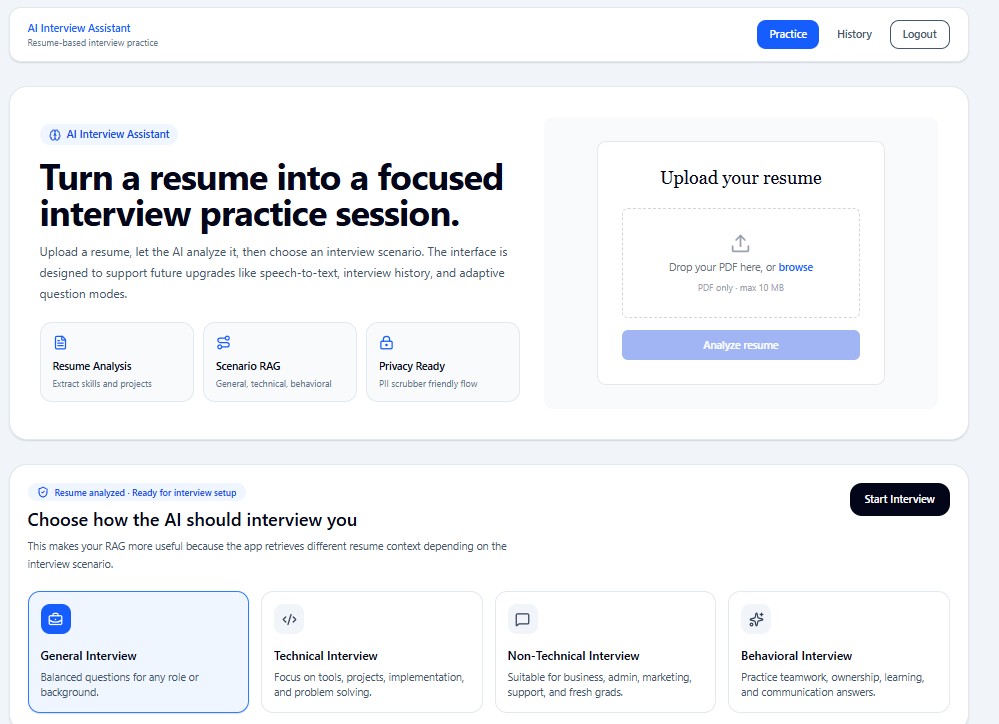
AI / Web App
AI Interview Assistant
Resume-aware mock interviews using retrieval augmented AI feedback.
Blockchain / Self-Sovereign Identity
Decentralized Academic Transcript System
Tamper-resistant academic credential verification using SSI, DID, IPFS, and blockchain.